A game engine and world-authoring environment built
around GPU-driven rendering, procedural placement and
shared network state.
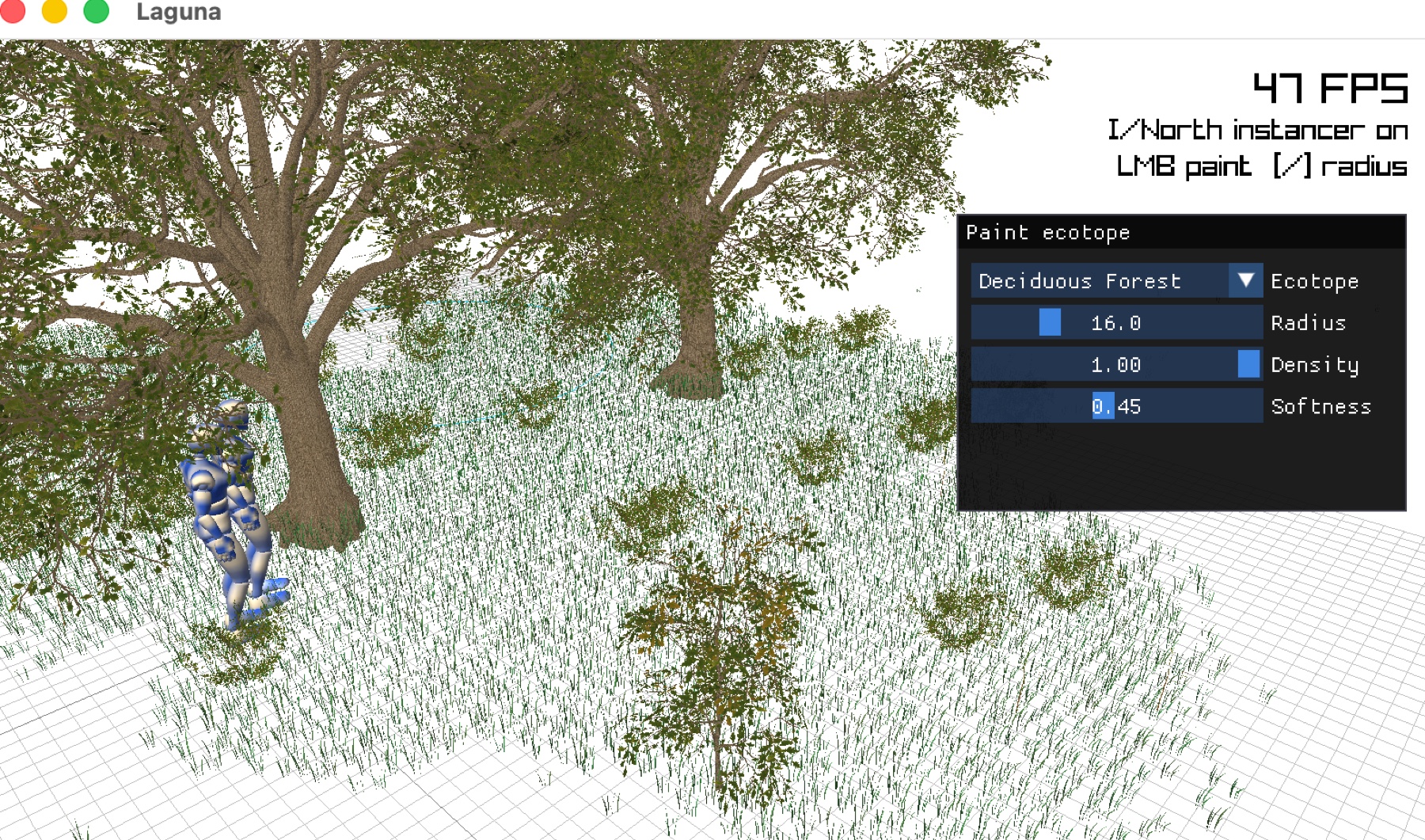
GPU instancing and ecotope painting in Laguna.
01 / Rendering
Skinned instanced renderer.
Laguna bakes the bone matrices for every animation
frame into a floating-point texture. The vertex shader
samples those matrices and performs the skinning, while
each unit only supplies its transform, pose, time
offset, speed and tint.
Hundreds of units can therefore share the same mesh,
material and animation texture while moving through an
animation independently. The animation work combines
the sparse, procedural approach described by David
Rosen with the texture-driven crowd-rendering method in
GPU Gems 3.
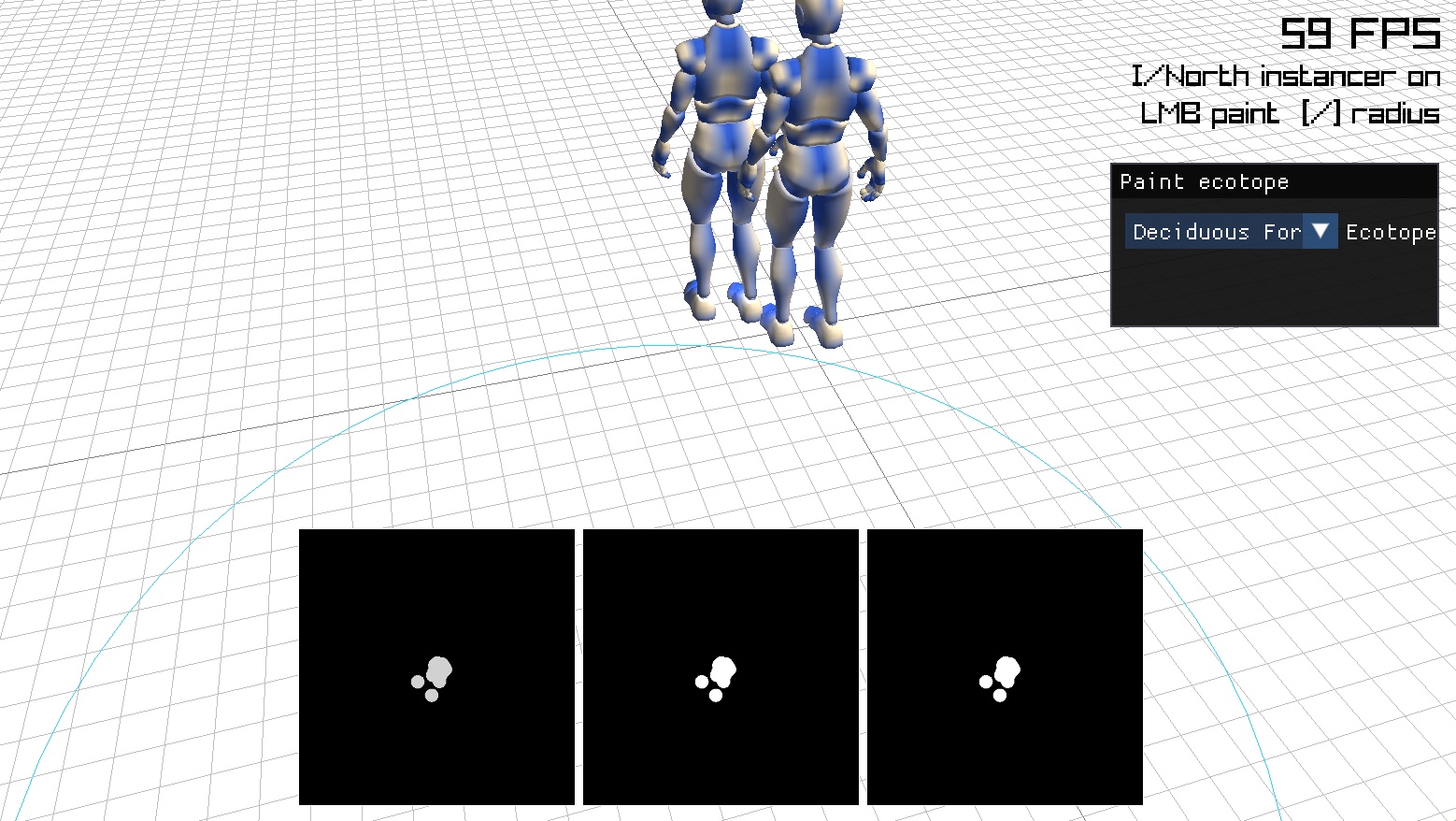
Early instancing test with independently timed units and
animation-texture data.
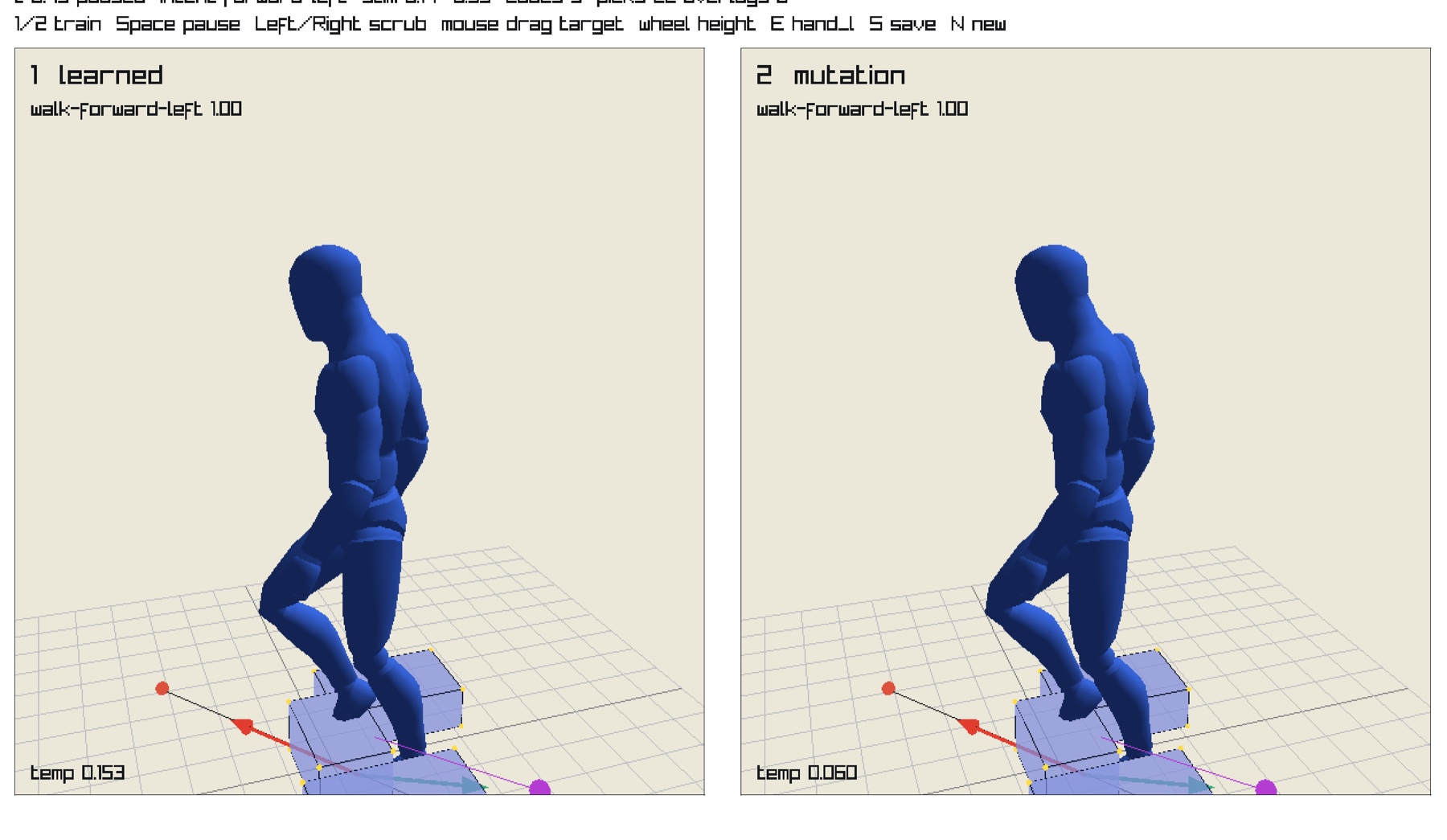
Comparing authored animation variations in the Laguna
toolchain.
01
One texture, different animation state.
The baker writes four texels for every bone matrix.
At draw time, instance data selects the pose and changes
time offset and speed; the shader reconstructs the
matrices and skins each vertex.
laguna/src/animation_texture.luaLua
local matrix_texels = frame_count * num_bones * 4
local texel_count = header_texels + matrix_texels

for frame_idx = 0, action.frameCount - 1 do
    for bone_idx = 0, num_bones - 1 do
        local bm = create_bone_matrix(
            anim_model.model.bindPose[bone_idx],
            action.framePoses[frame_idx][bone_idx]
        )
        local texel_idx = frame_data_offset +
            (global_frame_idx + frame_idx) * num_bones * 4 +
            bone_idx * 4

        write_texel(image_data, texel_idx + 0,
            bm.m0, bm.m1, bm.m2, bm.m3)
        write_texel(image_data, texel_idx + 1,
            bm.m4, bm.m5, bm.m6, bm.m7)
        write_texel(image_data, texel_idx + 2,
            bm.m8, bm.m9, bm.m10, bm.m11)
        write_texel(image_data, texel_idx + 3,
            bm.m12, bm.m13, bm.m14, bm.m15)
    end
end
The authored output is a set of maps and rules rather
than a manually maintained list of every tree, rock or
prop. A brush writes density into a texture; the GPU
generates stable candidate positions and uses
deterministic dithering to decide which candidates are
kept.
Density, asset ranges, terrain pages, slope, height,
masks and detail pressure can all affect the result.
Because the candidates are derived from world-space cells
and a seed, the same maps produce the same placement.
Deterministic dithering turns the painted density into
a stable distribution of instances.
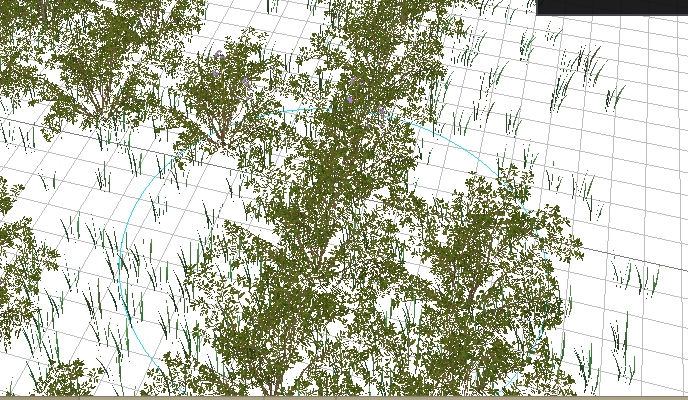
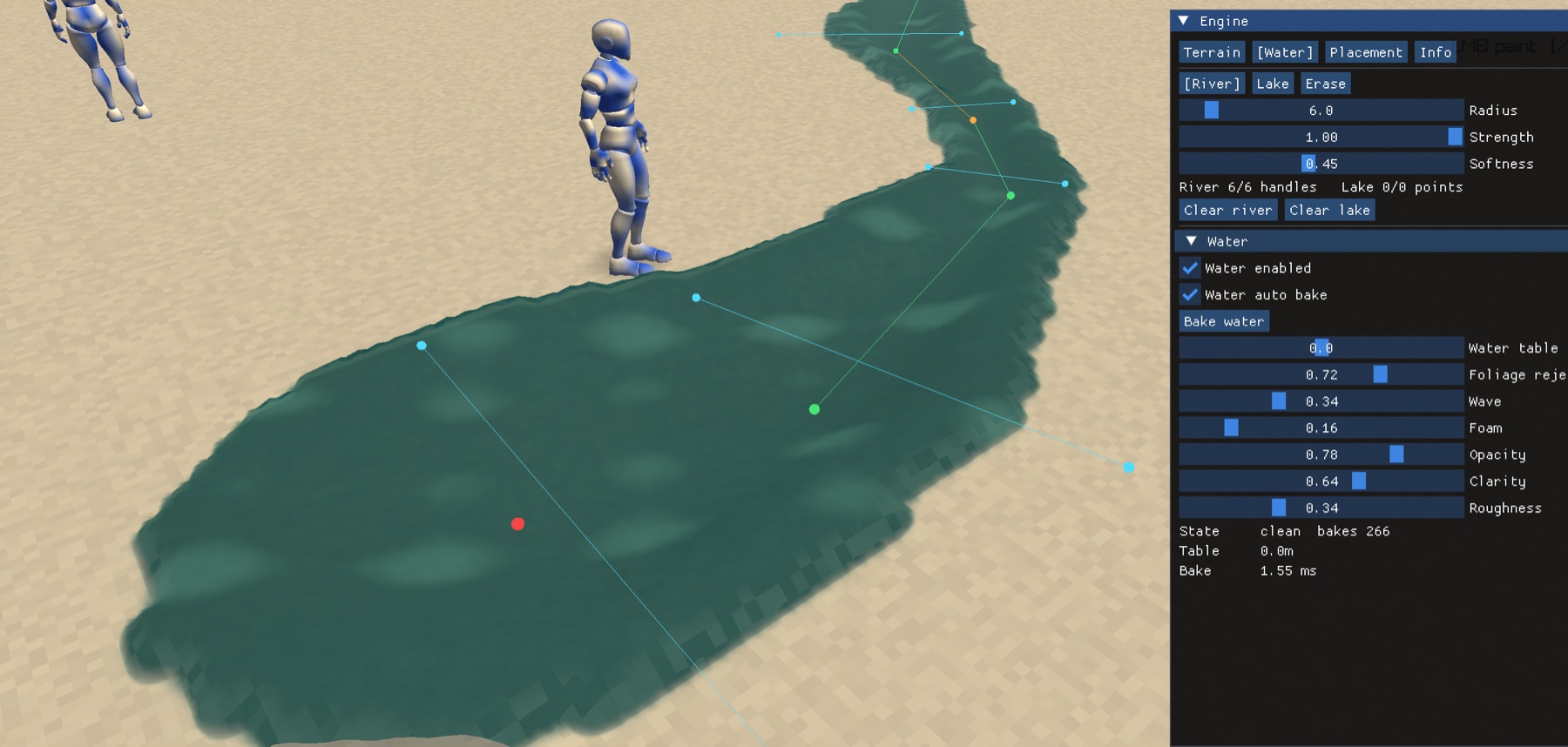
River-spline authoring in the same in-world tooling.
02
Paint density, derive instances.
The authoring shader adds or removes a soft brush from
the density texture. The placement shader samples that
texture and compares it with a repeatable hash for each
world cell, producing a stable dithered distribution.
Laguna is networked from the ground up. Player and
editor actions enter the world through the same event
path. In a networked session they are serialised, given
a canonical order and broadcast; a joining peer receives
a snapshot containing world state and persistent editing
events.
That architecture is the foundation for people joining
the same world, working in different scenes or areas and
hopping in and out without trying to diff scene files.
Editor authority is currently host-led while the
multi-editor permission model is opened up.
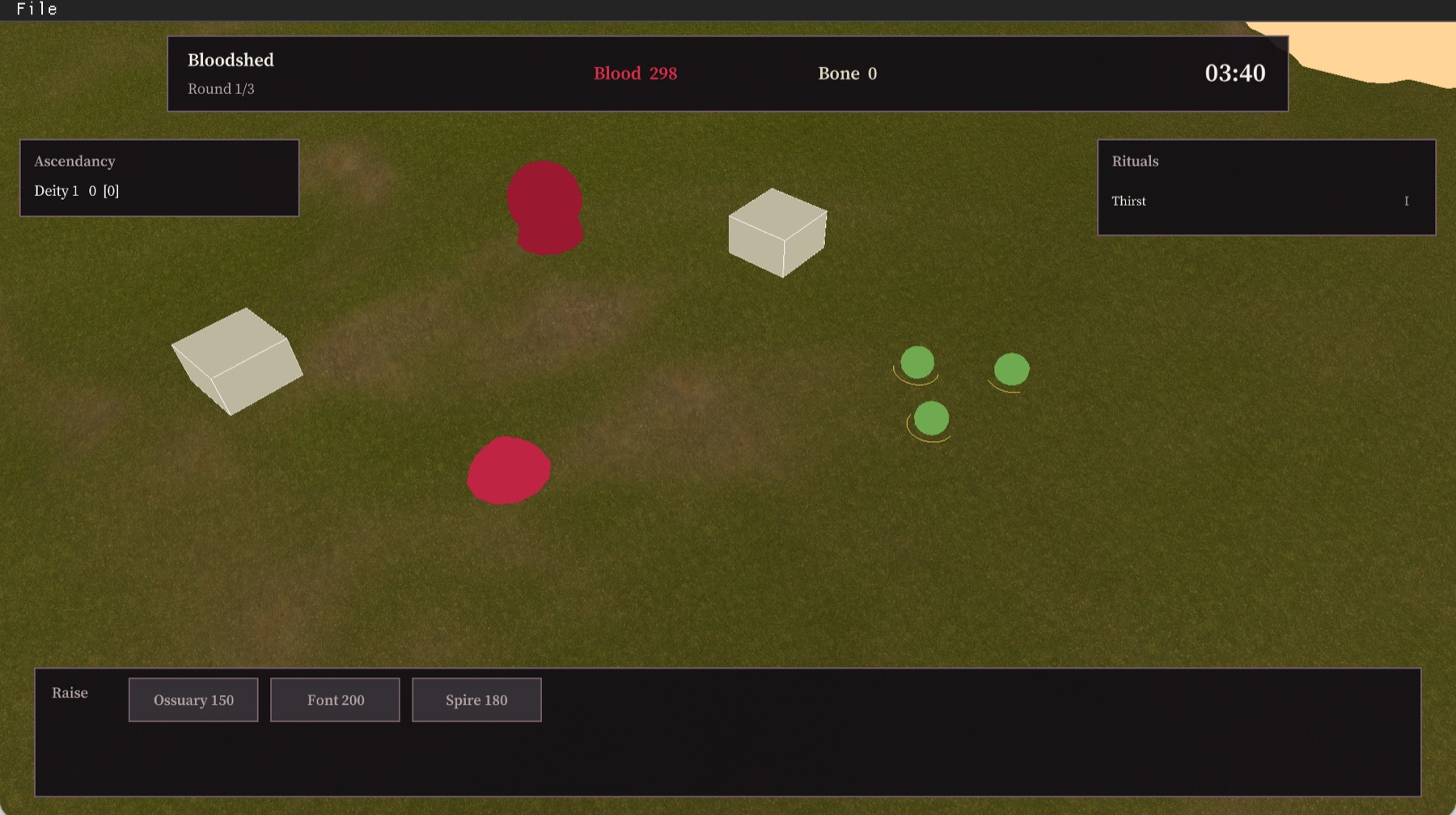
A running Laguna world; simulation and authored world changes
share the same event-based foundation.
03
World changes are network events.
Systems submit actions to the world without needing a
separate offline and online path. Snapshots preserve
terrain, road and instance-paint events so a new peer can
reconstruct the authored state on arrival.
laguna/src/ecs.luaLua
function World:submit_event(event)
    if self.network_submit_event then
        return self.network_submit_event(self, event)
    end
    return self:insert_event(event)
end
laguna/src/network_snapshot.luaLua
local PERSISTENT_EVENT_TYPES = {
    instance_paint = true,
    road_spline_point = true,
    terrain_paint = true,
    terrain_generate = true,
}

for _, event in ipairs(world.events) do
    if PERSISTENT_EVENT_TYPES[event.type] then
        snapshot.persistent_events[
            #snapshot.persistent_events + 1
        ] = event:serialise()
    end
end
Tech index
More technical work.
Return to the Tech page for NaturalMotion tools and the
wider technical-design index.